Anthropic reportedly spends $8 to $13.50 on compute for every $1 of subscription revenue they take in from heavy users. The Max plan at $200 a month lets power users consume $600 to $1,500 of API-priced compute at a flat rate. That gap cannot hold. If Anthropic closes it by charging what it actually costs to serve me, my current usage on Claude Pro plus Fable overage starts looking like a five-figure monthly bill a couple of years out. I’d rather not be there when it arrives.
The workflow I’m architecting to avoid it has two brains. A frontier model does the planning, because world context and hard thinking justify the price at that level. A local model runs on my MacBook and does the actual writing of code, because tokens on a machine I own cost nothing after the electricity bill.
Not the standard hybrid advice
The usual local-plus-frontier recipe puts local on autocomplete and frontier on hard tasks. Local answers the easy 80%, frontier handles the tricky 20%. Fine pattern. Not what I want.
My split is different. Frontier writes a code-level plan for the hard task. Local implements that plan. The hard-thinking part still happens in Fable or whatever the top model is at the time. The token-heavy part, which is editing a bunch of files or drafting a full blog post, happens on-device.
The reason this works is that a plan changes what implementation actually is. When a local model is doing the thinking AND the writing, it needs to reason about the problem AND produce the output. When the plan is already written, the model is following a spec. Following a spec is much closer to what small models are actually good at.
The critique of local models is real, and the split answers it
Independent tests show developers spend 30-40% more time reviewing and correcting local model output versus frontier cloud. On a real engineering task the ratio was 68x slower end-to-end. If I’m just swapping Claude for a local model on the same prompts, that critique lands, and it lands hard.
The two-brain workflow is exactly the workaround. I review less because I’m not asking the local model to think. I’m asking it to translate a plan into code, and reviewing whether it did that faithfully. The review surface narrows a lot.
I’ll find out how well it works in practice.
What my M1 Max already runs
I’m on an M1 Max MacBook Pro with 64GB of unified memory. Not the latest generation. Still very capable.
Qwen3-Coder 30B A3B Instruct runs at 33 tokens per second on that hardware. Above reading speed and comfortably interactive. The local half of the workflow is not vapourware. It’s a Homebrew install away, on a machine that’s been sitting on my desk for years.
That changed my framing. I had been thinking about the local model piece as something to wait for. It isn’t. The hardware is here. What’s missing is the model quality and the plumbing between the two brains.
What DGX Spark tells me is coming
Nvidia shipped DGX Spark on 15 October 2025. Jensen Huang hand-delivered the first unit to Elon Musk at SpaceX two days earlier. $3,999 for a desk-sized personal AI supercomputer with 128GB unified memory and Grace Blackwell silicon, capable of running inference on 200-billion-parameter models locally.
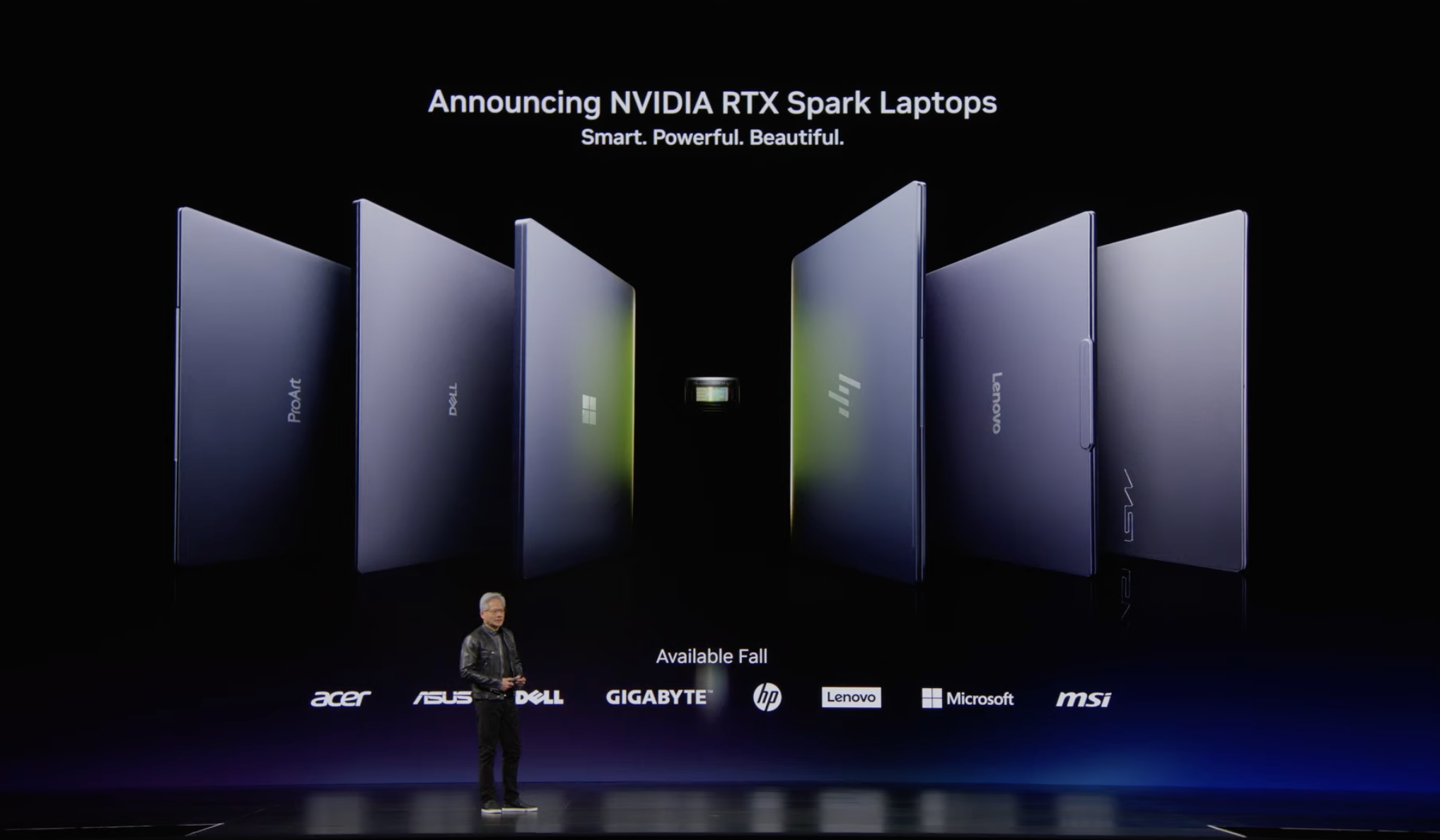
The same silicon is coming to consumer laptops. Nvidia’s N1X chip pairs a 20-core Arm CPU with a Blackwell GPU (roughly RTX 5070-class). Windows-on-Arm laptops from Asus, Dell, HP, Lenovo, Microsoft and MSI are expected in late 2026. Jensen has already confirmed the DGX Spark’s GB10 chip is powered by N1 silicon, so the laptop chip is the same family in a smaller box.
I don’t think I’ll buy a DGX Spark. The interesting thing about it isn’t the product; it’s what the product proves. The personal AI supercomputer is now a category with real hardware in it, a public roadmap into consumer laptops, and committed OEM partners.
What I’m actually waiting for
Not hardware. Model quality.
Qwen3-Coder is close to Opus-tier for a lot of everyday work, but it’s not Opus. For the hardest bits of building Podtastic, I’d notice the gap. What I need is one more generation of open-source coding models to close it, ideally at a size that still runs on the hardware I already own or on whatever Mac I’m on when the M-series line hits my next upgrade cycle.
I also need the plumbing. The frontier-writes-plan then local-writes-code handoff isn’t a native feature of any tool I use. Claude Code doesn’t hand off to Qwen. Ollama doesn’t ingest a plan from Fable. Right now I’d be wiring this together myself. Which is fine for a personal project. It’s why I’d rather start now than wait.
Where this lands
I’m running the local half of the workflow today, on the tasks it can already handle. Fable stays for the planning half while it’s still included in Pro. When the local coding model reaches Opus-tier at 30B, the ratio flips further and more of the day-to-day moves off Anthropic entirely.
If Anthropic’s prices stay where they are, my bill drops as I offload more of the token-heavy work. If Anthropic’s prices climb to close the loss they’re absorbing, my bill would have exploded without this workflow. Either way it’s the right shape.